

Non-party Records

Effortless Access to Critical Records
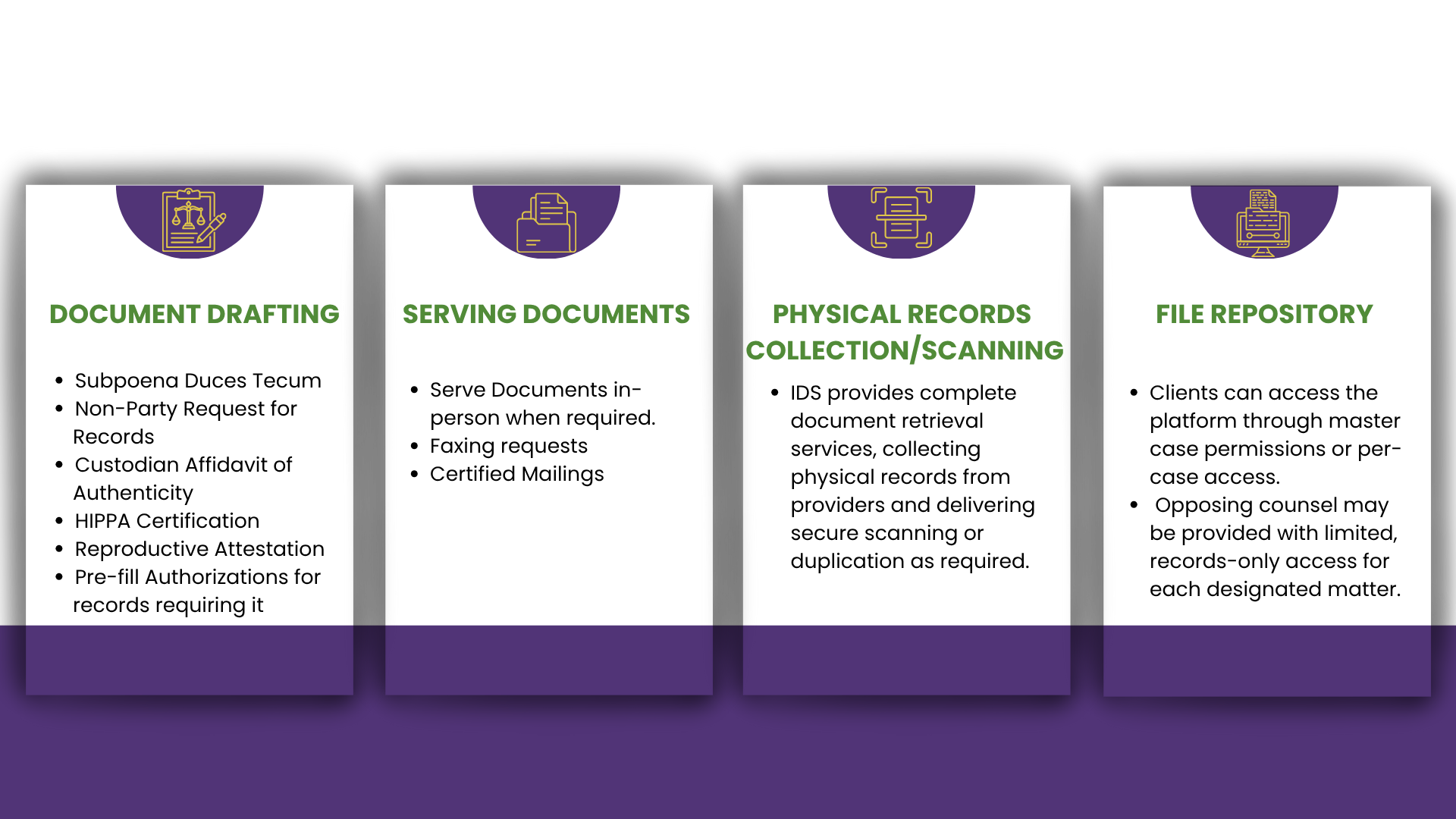
At IDS, we streamline the entire non-party record retrieval process, making it simple, efficient, and reliable. Whether you need medical or non-medical records, our team handles every step—from contacting providers to securing the required documentation—so you can stay focused on your case rather than administrative tasks.
We work directly with companies and record holders to ensure your documents are delivered quickly, securely, and to all appropriate parties, including opposing counsel. Our optimized record retrieval process helps law firms reduce delays, improve case management, and gain peace of mind with a trusted partner managing the process from start to finish.
Services
FAQs
Professional Process Serving Across Indiana
What is non-party record retrieval?
Non-party record retrieval involves obtaining documents or records from individuals or entities not directly involved in a legal case, such as hospitals, employers, or financial institutions.
Is non-party record retrieval legal in Indiana?
Yes. Indiana law permits parties to request records from non-parties through subpoenas, provided the request complies with discovery rules and privacy regulations.
What types of records can be retrieved?
Common records include medical files, employment history, financial statements, phone logs, and educational transcripts. Requests must be relevant to the legal matter.
How are records requested from non-parties?
Records are typically requested via subpoena duces tecum, which compels the non-party to produce documents. The subpoena must be properly served and include specific instructions.
Source: Indiana Public Access Handbook
Do non-parties have to comply with record requests?
Yes, unless they file a motion to quash or object based on relevance, burden, or confidentiality. Courts may hold hearings to resolve disputes over compliance.
Are there privacy concerns with non-party records?
Absolutely. Records containing sensitive information—such as medical or financial data—must be handled in compliance with HIPAA, FERPA, and other privacy laws.
Can IDS retrieve records from out-of-state entities?
Yes. IDS can coordinate with out-of-state custodians and comply with interstate subpoena procedures, including domestication when required. Importantly, a Release of Information is the quickest and easiest way to retrieve out of state records.
How long does record retrieval usually take?
Turnaround times vary based on the entity’s responsiveness and complexity of the request. Most records are retrieved within 7–30 business days. This does not include the initial 15-day waiver period.
What happens if a non-party refuses to release records?
The requesting party may file a motion to compel. Courts will evaluate the request’s relevance and burden before ordering compliance.
Does IDS ensure confidentiality during retrieval?
Yes. IDS uses secure channels, encrypted storage, and strict access controls to protect sensitive records throughout the retrieval process.