

DOCUMENT SCANNING
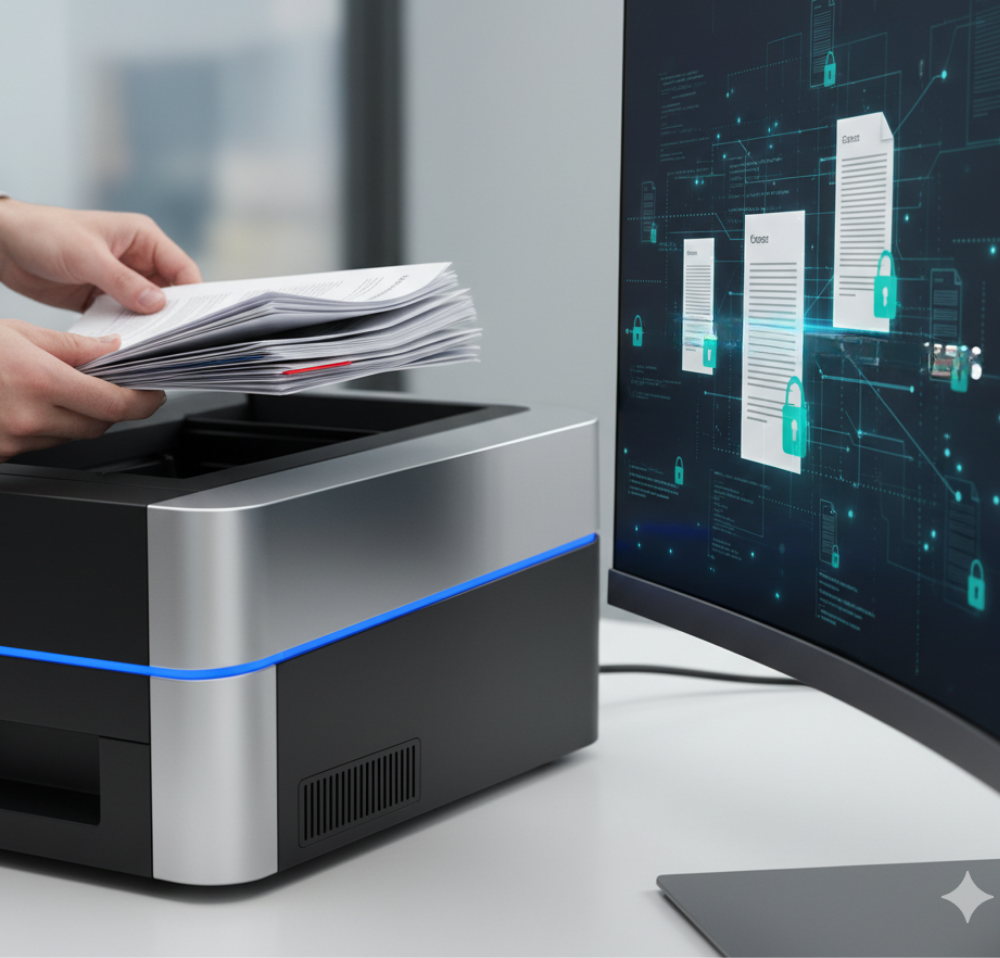
SCANNING & DOCUMENT MANAGEMENT
We provide comprehensive scanning and document management solutions designed to simplify the way you handle information. From converting paper files into high-quality digital images to organizing them into searchable formats, we ensure every document is easy to access, store, and share. Our process is built for efficiency, accuracy, and complete transparency.
To support your workflow, we include services such as document preparation, disassembly, and OCR (Optical Character Recognition), giving you fully searchable digital files. Whether you’re managing a small batch of records or large volumes, we deliver a seamless, secure, and organized system that helps you stay productive and in control of your data.
Additional Services
5M+
SCANNED PAGES FOR
A LAW FIRM
20+
YEARS OF DIGITIZING HEALTH AND
MEDICAL RECORDS
2000+
CONVERTED BOXES OF
REAL ESTATE DOCUMENTS
500,000+
PROCESSED PAGES FOR A GOVERNMENT AGENCY
FAQs
Secure Document Scanning Across Indiana
Is document scanning legally recognized in Indiana?
Yes. Indiana courts and agencies accept scanned documents as valid records when they meet standards for authenticity, chain of custody, and digital preservation.
Source: Indiana Administrative Rule 6
What standards must scanned documents meet for court use?
Scanned documents must be created using approved digital imaging systems, maintain image integrity, and be stored securely. Hybrid systems using both digital and microfilm are also permitted.
Source: Indiana Administrative Rule 6
How long must scanned documents be retained?
Retention depends on the document type. Indiana’s Records Retention Schedules specify how long each category must be kept. Critical records may require permanent retention.
Is HIPAA compliance required for scanning medical records?
Absolutely. Scanning patient records must comply with HIPAA standards for privacy, access control, and secure storage. Violations can result in fines and legal action.
Can scanned documents be used as evidence in court?
Yes, if they meet evidentiary standards for authenticity put forth by the court and have an established chain of custody. Courts may require metadata or audits to verify integrity. Witnesses may also be called to testify as to their accuracy.
What file formats are recommended for scanned legal documents?
PDF/A is preferred for long-term archiving. TIFF is also accepted for high-resolution preservation. Formats must be non-editable and widely supported.
Are there restrictions on scanning IDs in Indiana?
No. Indiana does not prohibit ID scanning, and businesses may retain scanned ID data unless restricted by federal privacy laws.
What security measures should be in place for scanned files?
Files should be encrypted, access-controlled, backed up regularly, and stored in secure environments. HIPAA and ABA guidelines recommend multi-layered protection.
Can scanned documents replace originals?
Yes, if the scanned version meets legal standards and retention policies. However, some records may require physical preservation or dual-format storage.
Source: Indiana Code § 5-15-6-2.5
Does IDS offer HIPAA-compliant scanning services?
Yes. IDS uses secure workflows, encrypted storage, and trained staff to ensure full HIPAA compliance for all medical and legal scanning projects.